QUAND MÊME (Even so)
Reflections on the Work of Renée Martine Crappier
Abstraction or figuration ? :
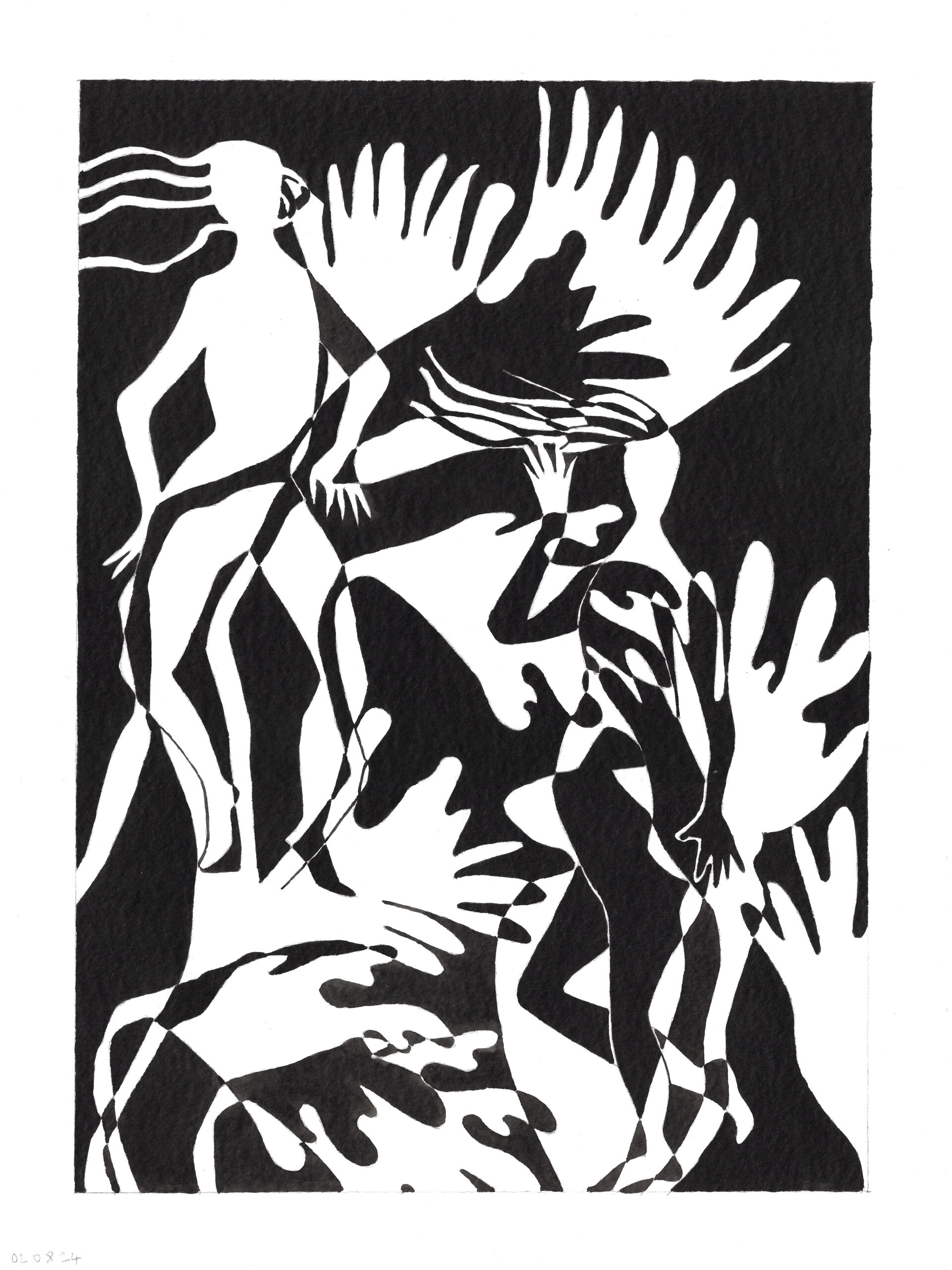
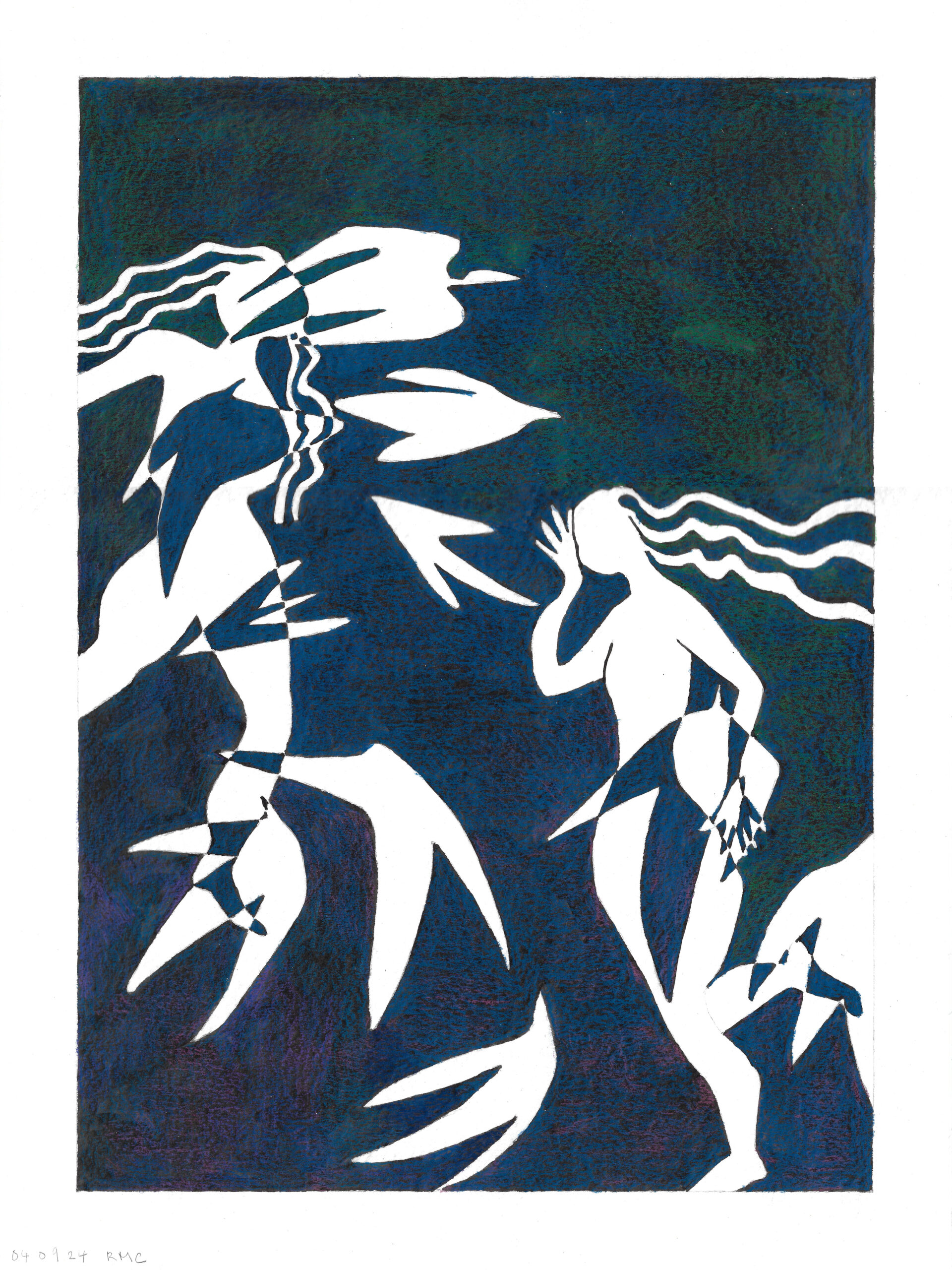
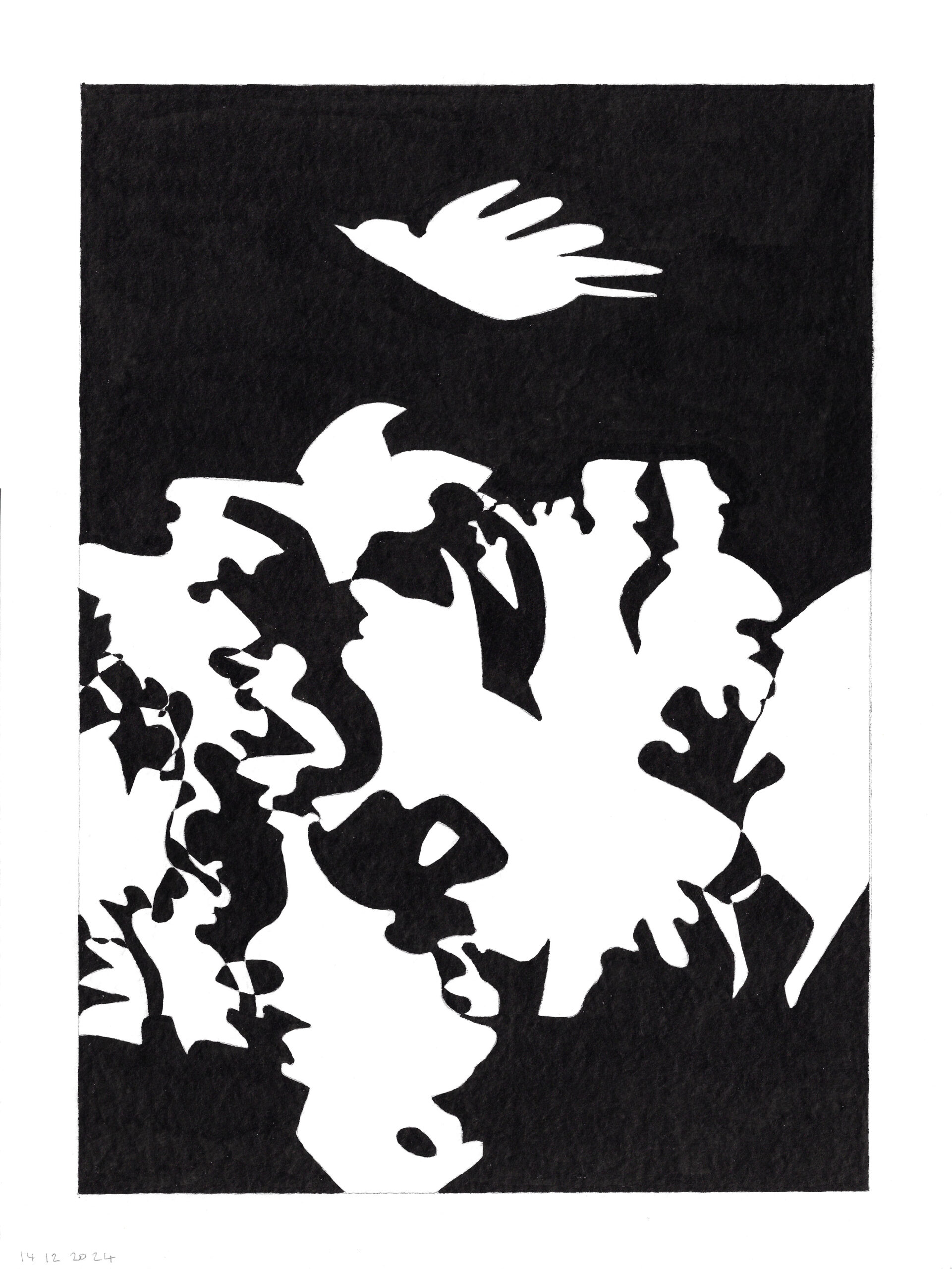
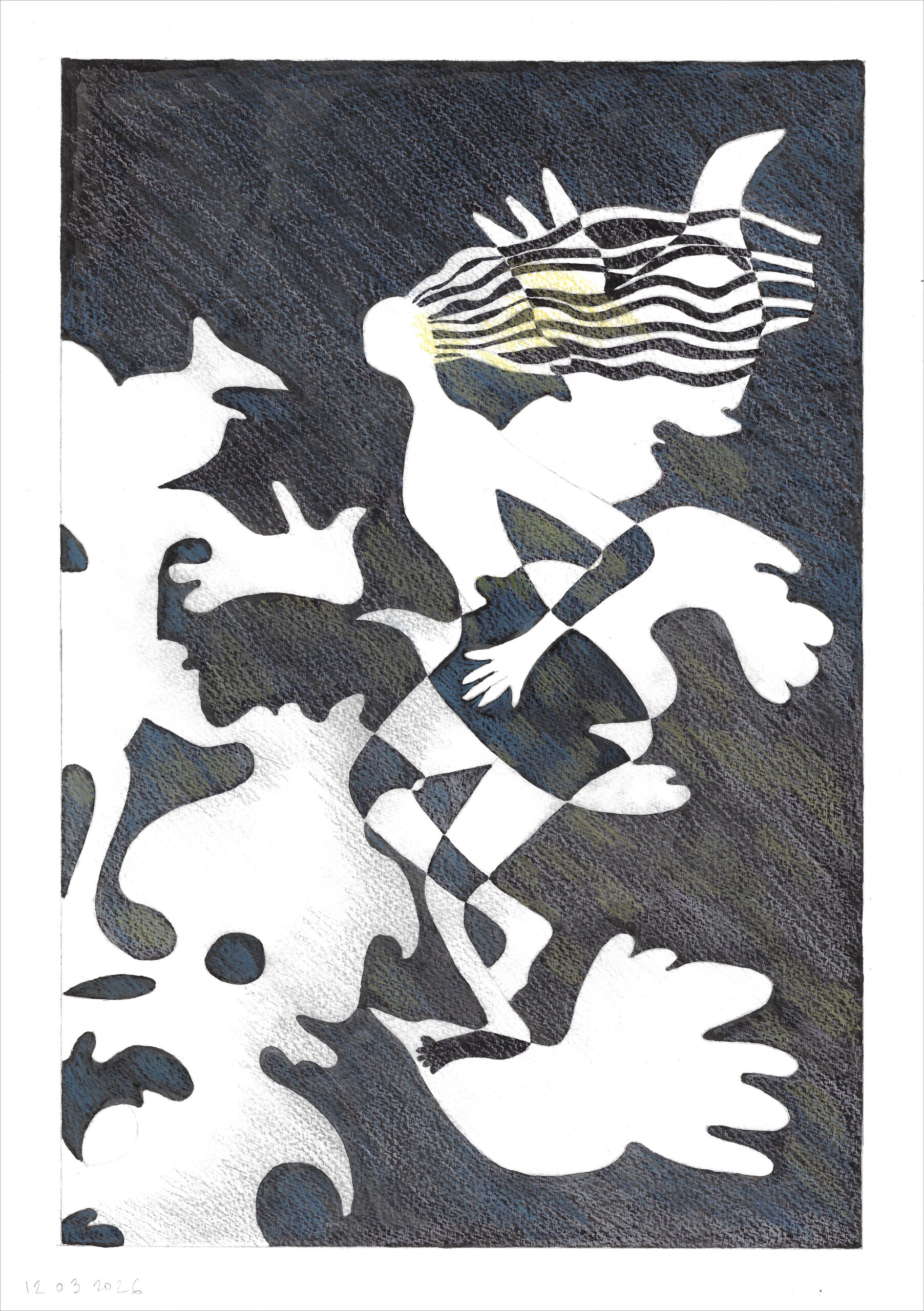
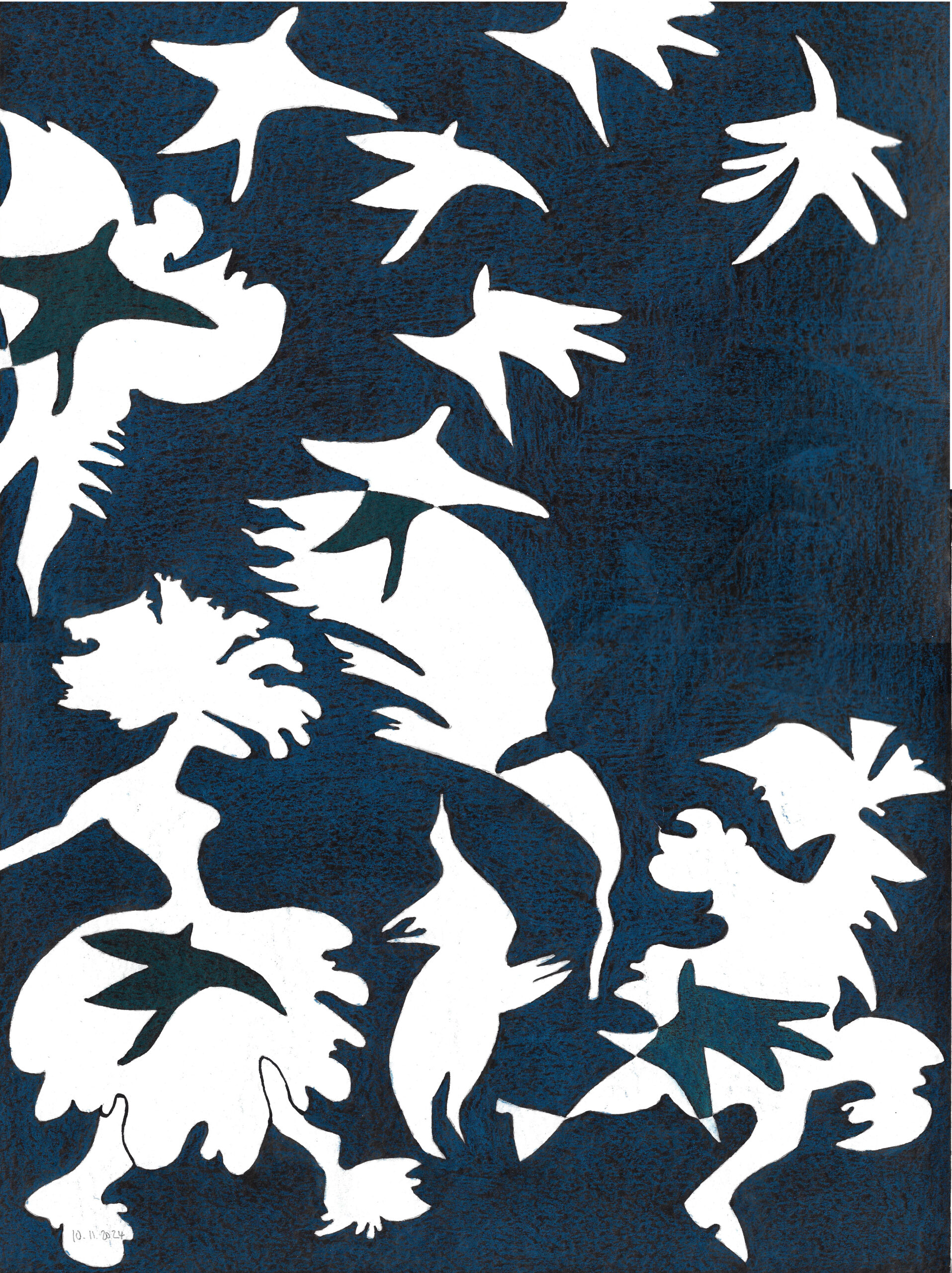
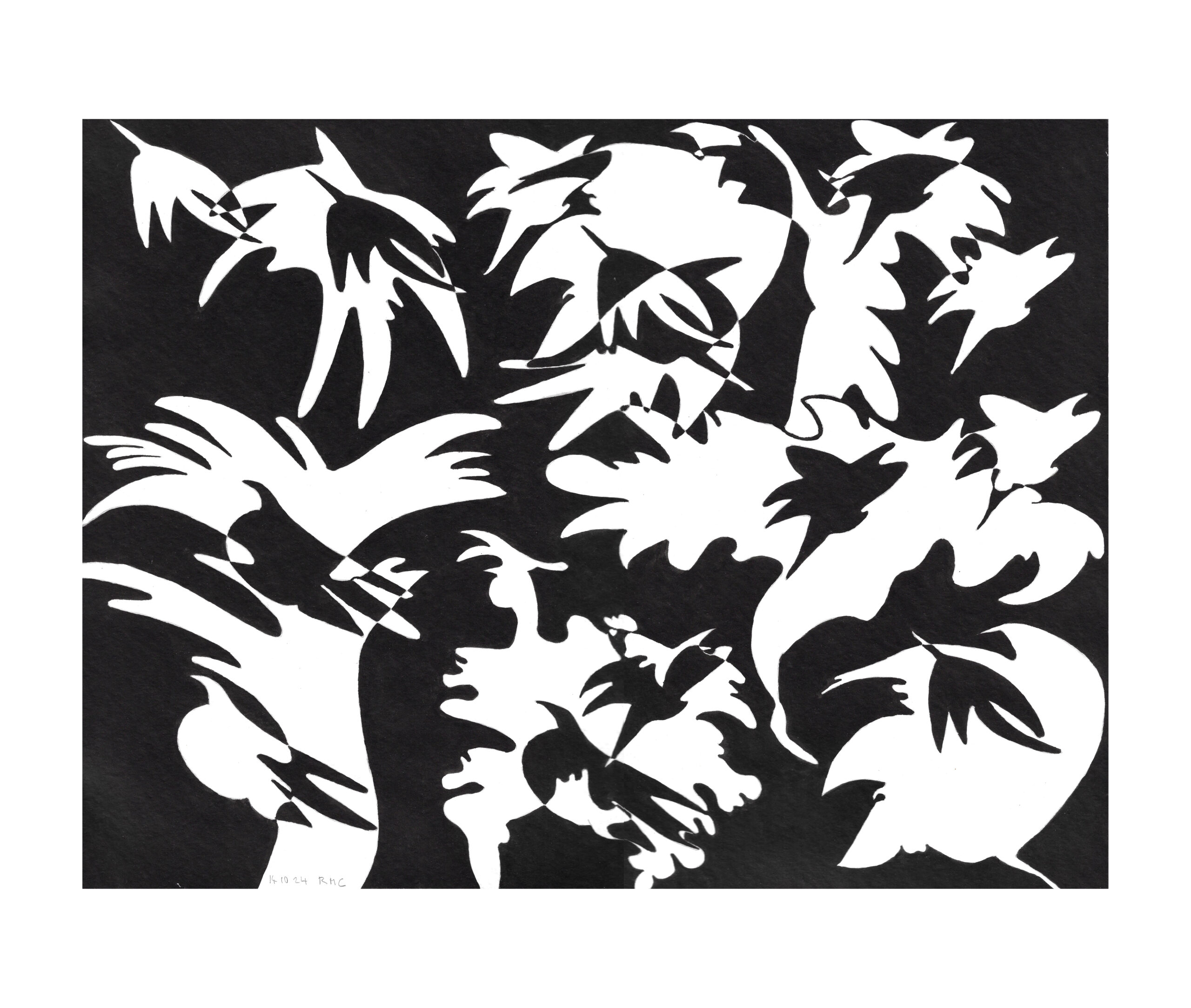
Renée Martine Crappier (RMC) situates herself somewhere between lyrical abstraction, a poetic sketchbook, and a surrealist imagination, without ever confining herself to a single movement. Guided by gesture and free association, her works give the impression of being in the process of appearing. The line diverges, fades, and restarts, creating a sensation of permanent movement. There is a clear kinship here with surrealist automatic drawing or a sensibility close to art brut, but within a more refined and meditative register. Empty space is just as important as form; many of her compositions breathe thanks to the areas left white.
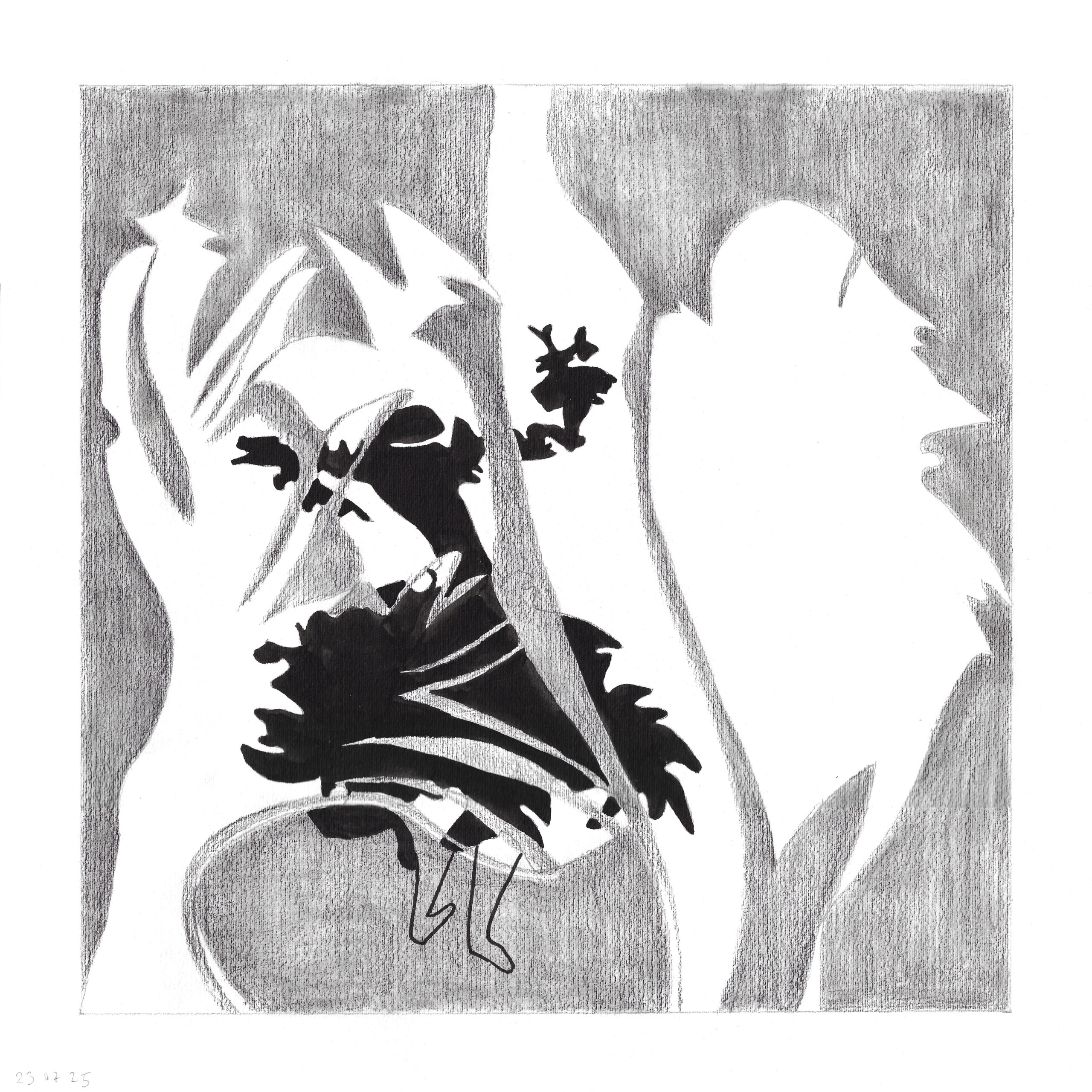
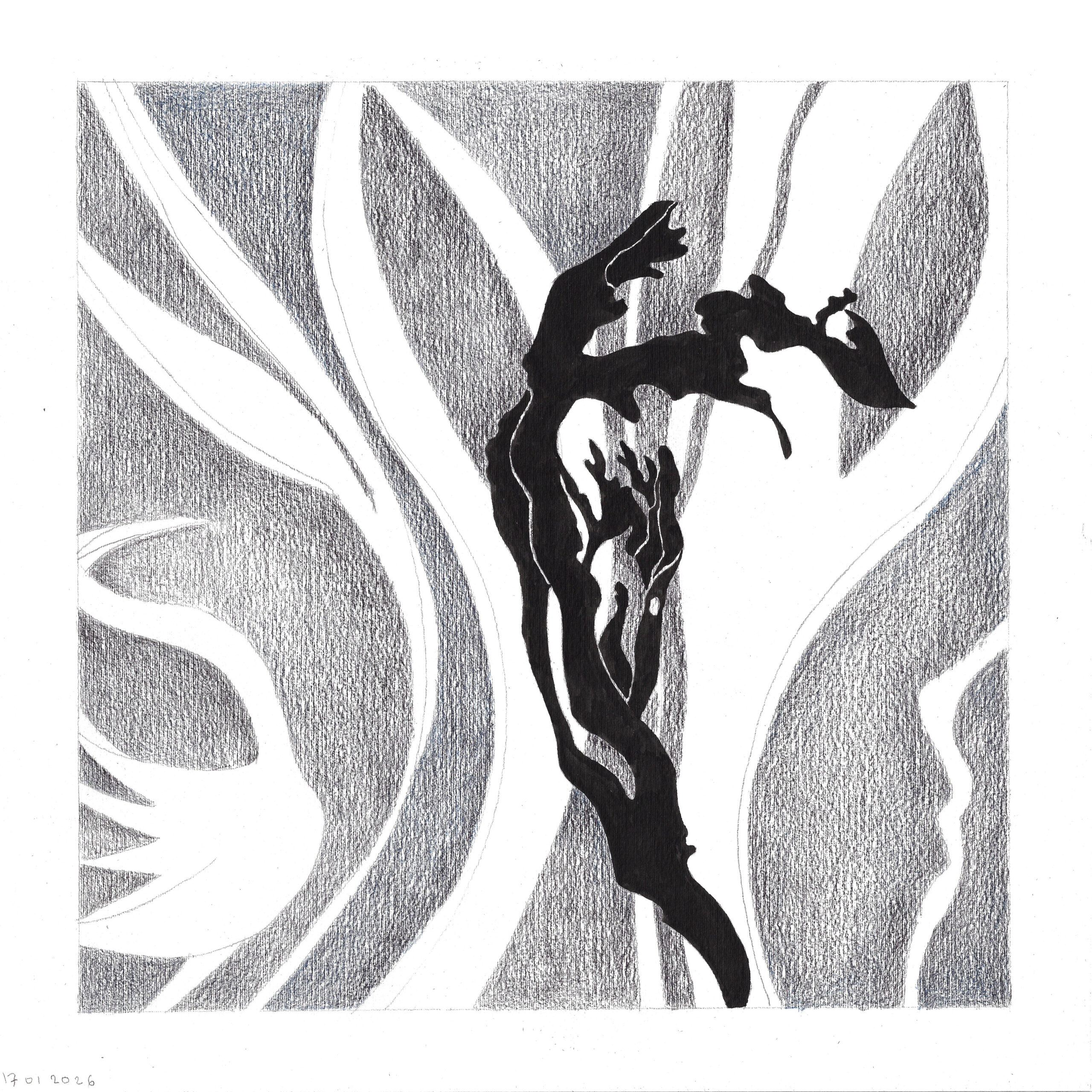
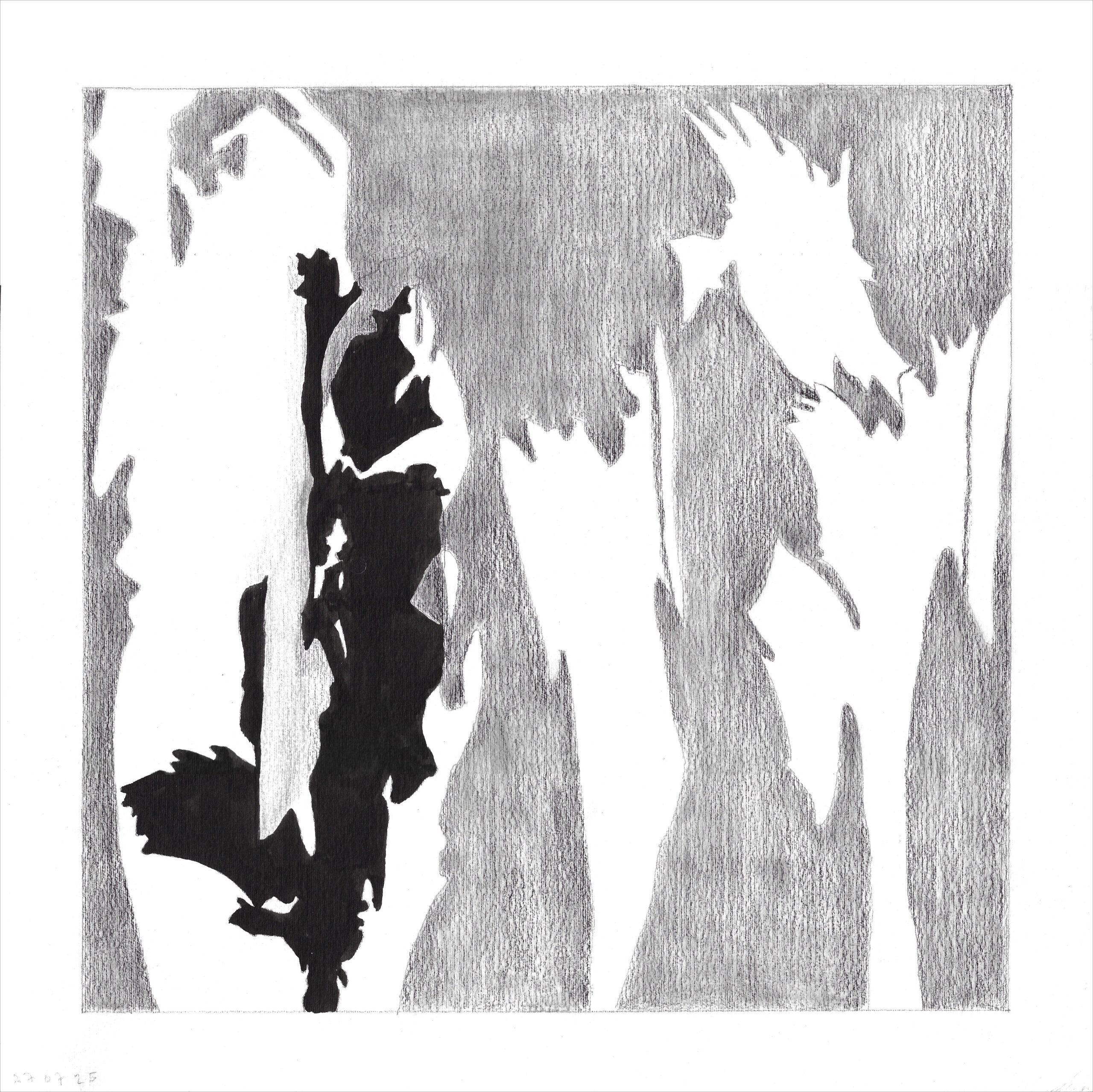
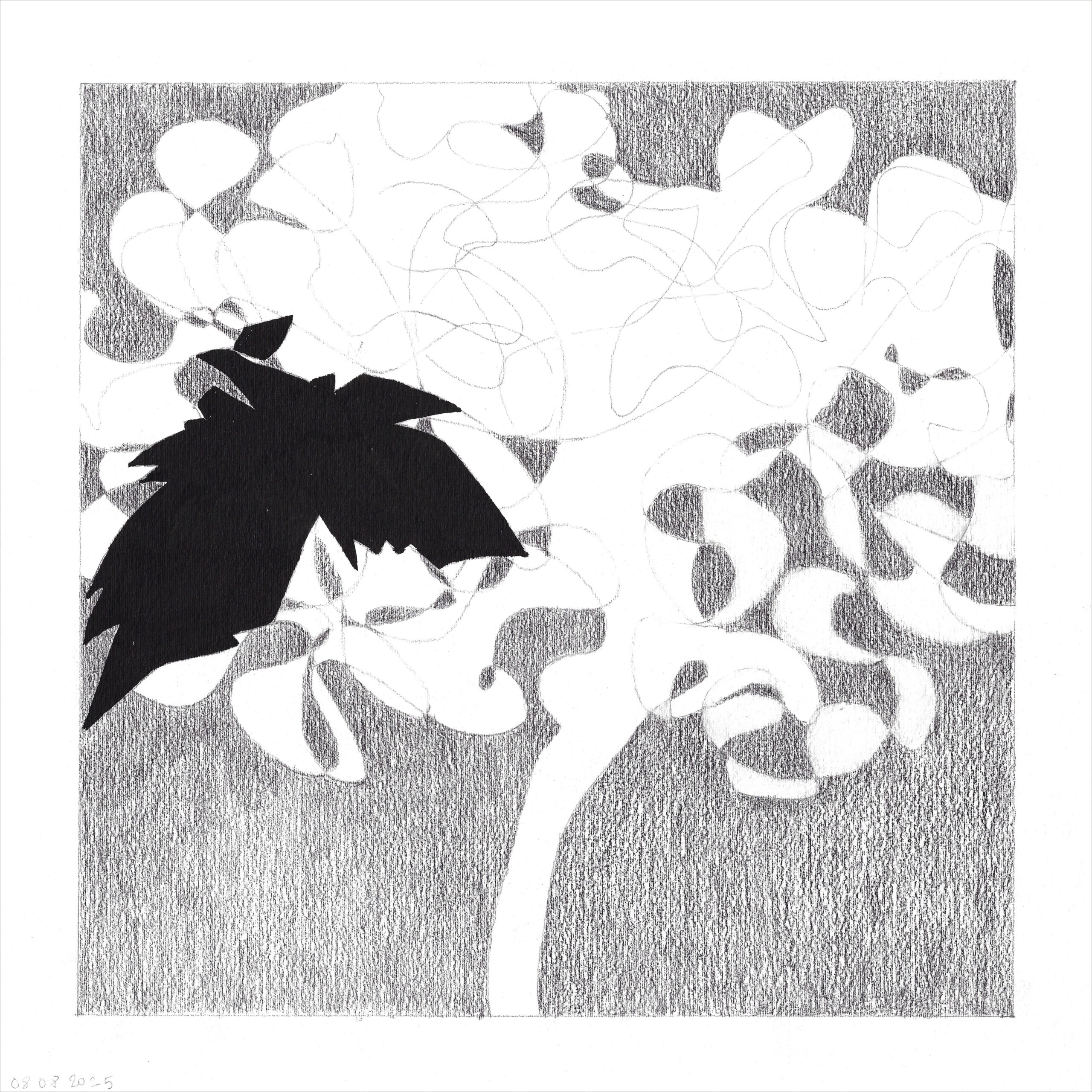
The artist’s universe rests on a permanent dialogue between women, birds, and trees. The silhouettes are not naturalistic; the body sometimes dissolves into color or merges into patterns to better capture a fragile inner state. She never fully chooses between abstraction and figuration. The viewer’s gaze oscillates constantly: do we see a face, an animal, a piece of writing, or a simple smudge? This ambiguity is essential, granting the spectator an active role in interpretation.
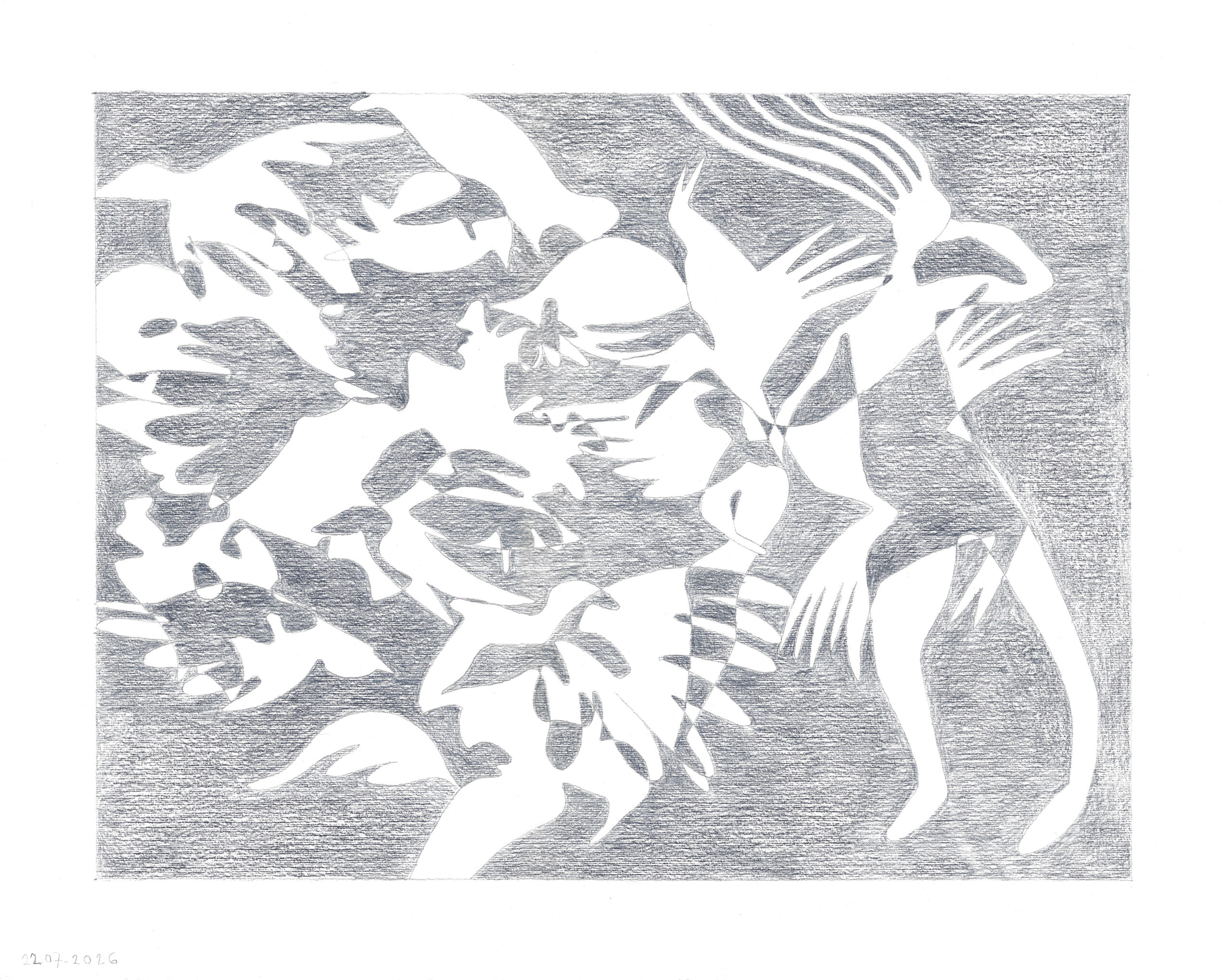
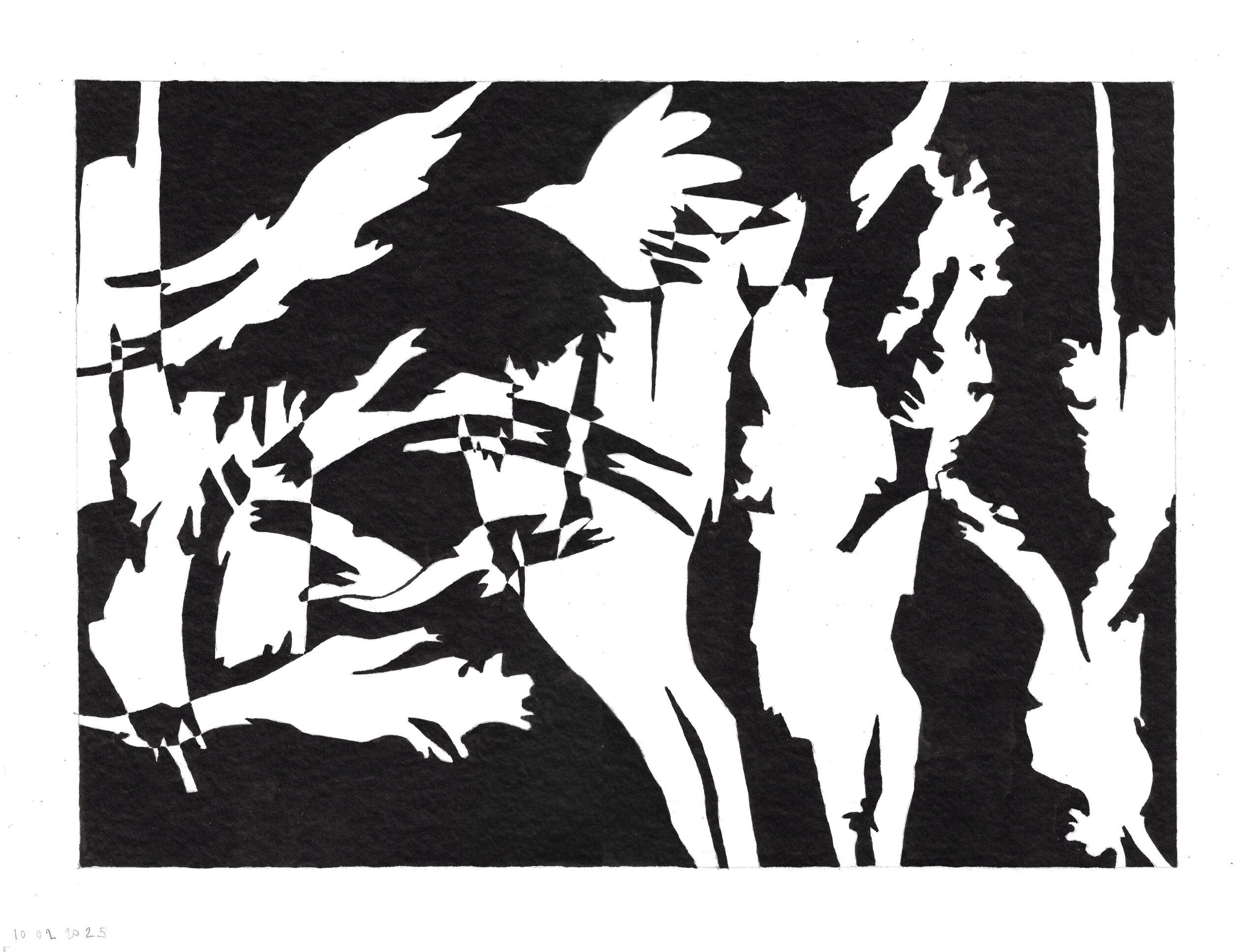
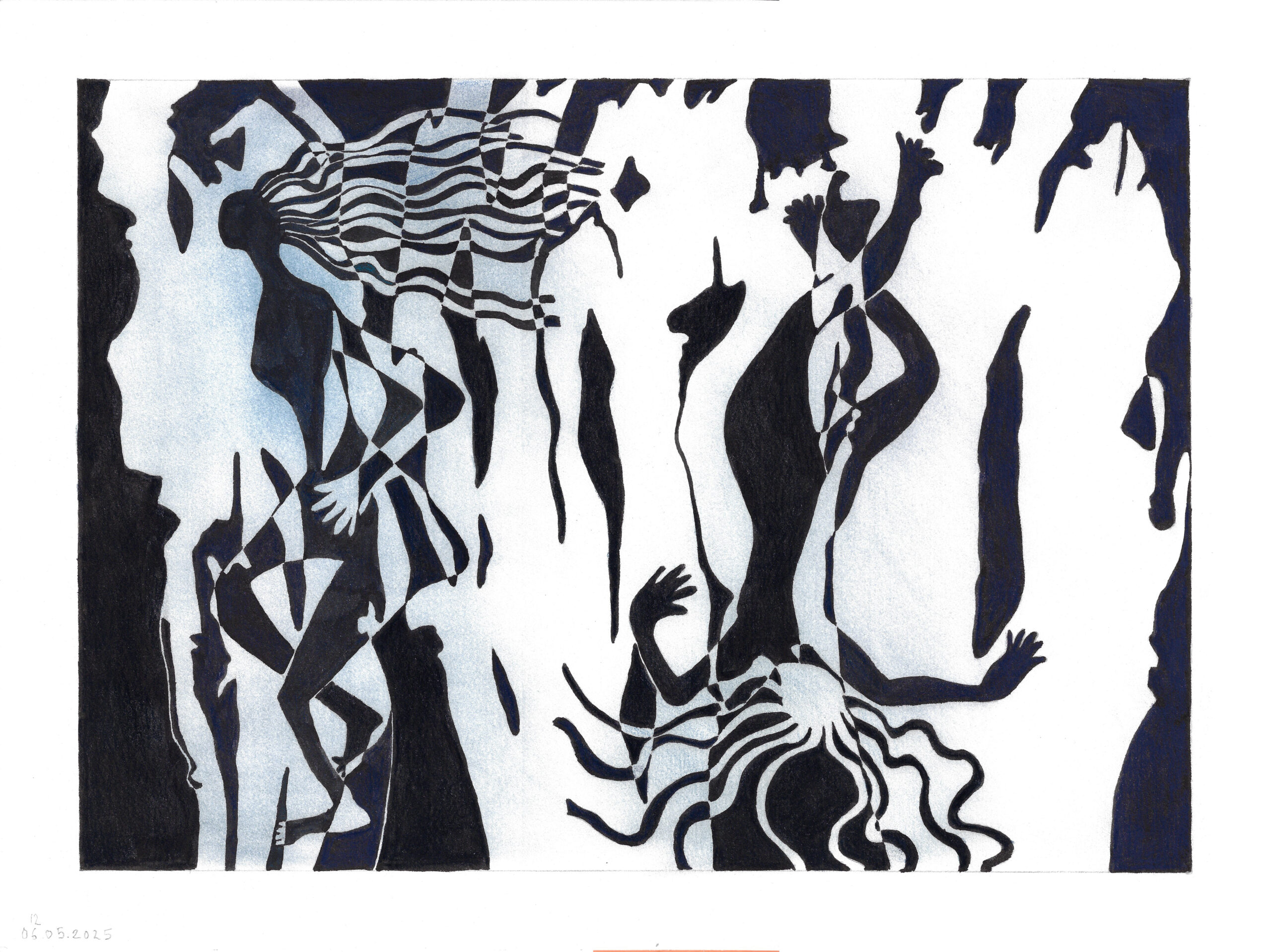
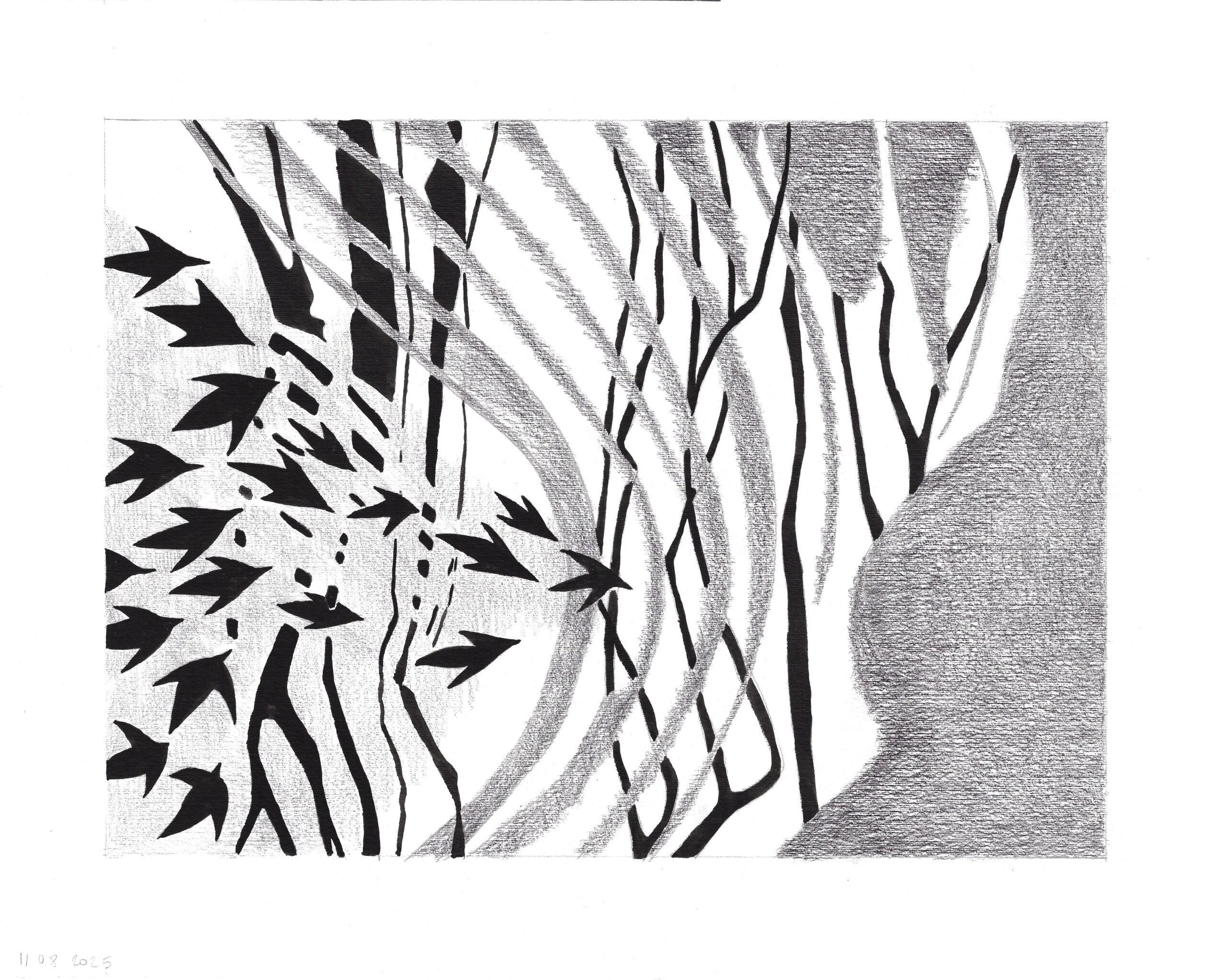
The works stem from a rigorous yet intuitive creative method visible in her studio. Everything begins with stones, from which she draws dozens of sketches made in a state of intense concentration. It is from this raw material that the drawings are born. Always guided by her subconscious, she extracts narratives from these drawings in the form of scenes, building the foundation of a discreet autobiography. India ink and colored pencil come into play in the final stage. By dressing or « making up » the initial shapes, the color sometimes alters their original meaning. The work, though abstract at first glance, thus ends up figuring a deep, intimate reality. This is her way of telling her life story without revealing anything, but also of reacting, through the filter of art, to the upheavals of the world.